Esports
Building a central digital hub for ArtU's esports community — from zero web presence to a fully branded, inclusive platform for competitive teams and campus collaboration.
Research & Front-end
Research & Front-end
Research & Front-end
Without a Home
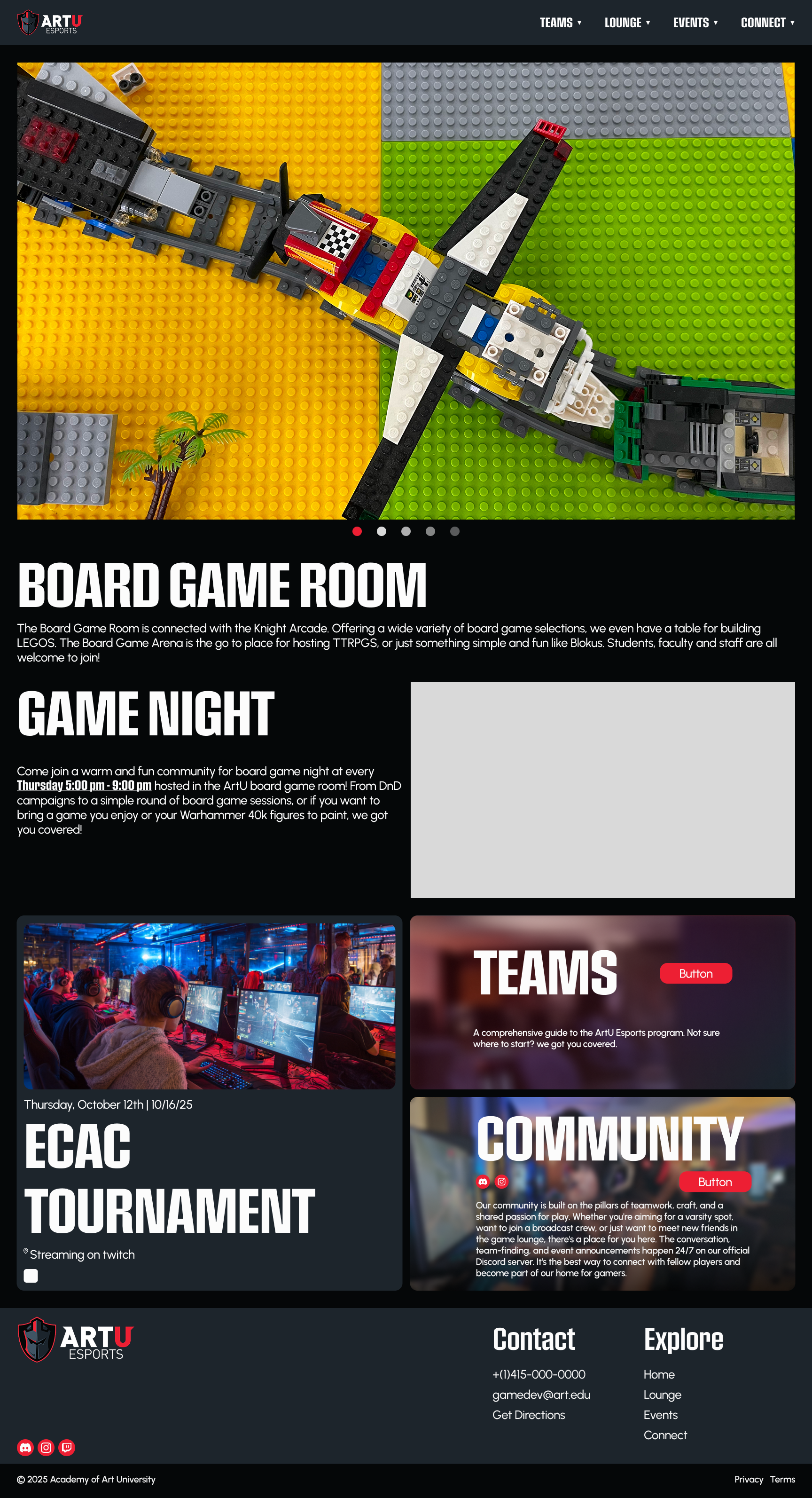
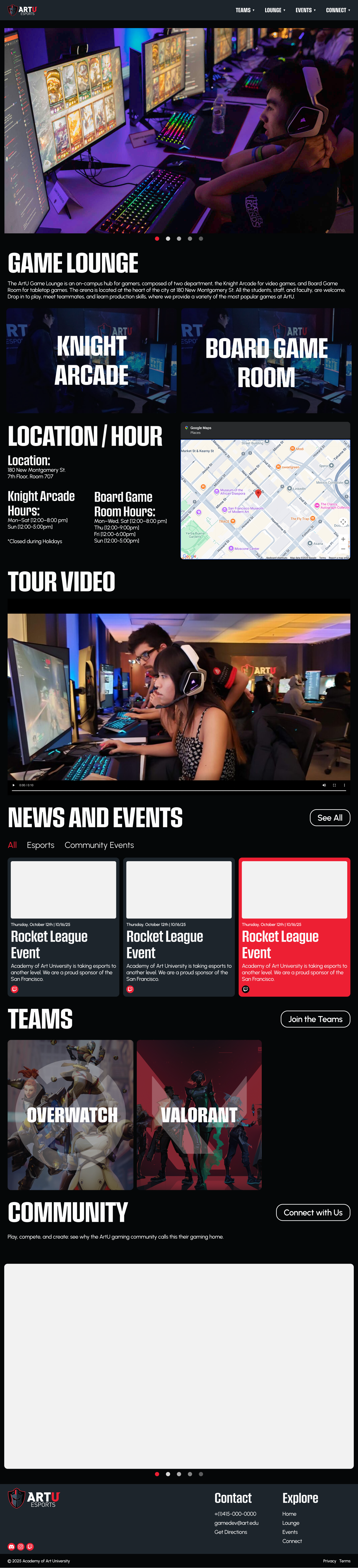
The ArtU Esports department had a growing community but is still unknown to many prospective students. The university had discussed building a website — but it never happened. Students had no central hub, the program had no brand identity online, and an entire community was invisible to the campus.
The most basic success metric — simply existing online. A live, functional site gives the program legitimacy, discoverability, and a foundation for everything else.
Drive measurable increases in student traffic to the physical game lounge — converting digital awareness into real-world community participation.
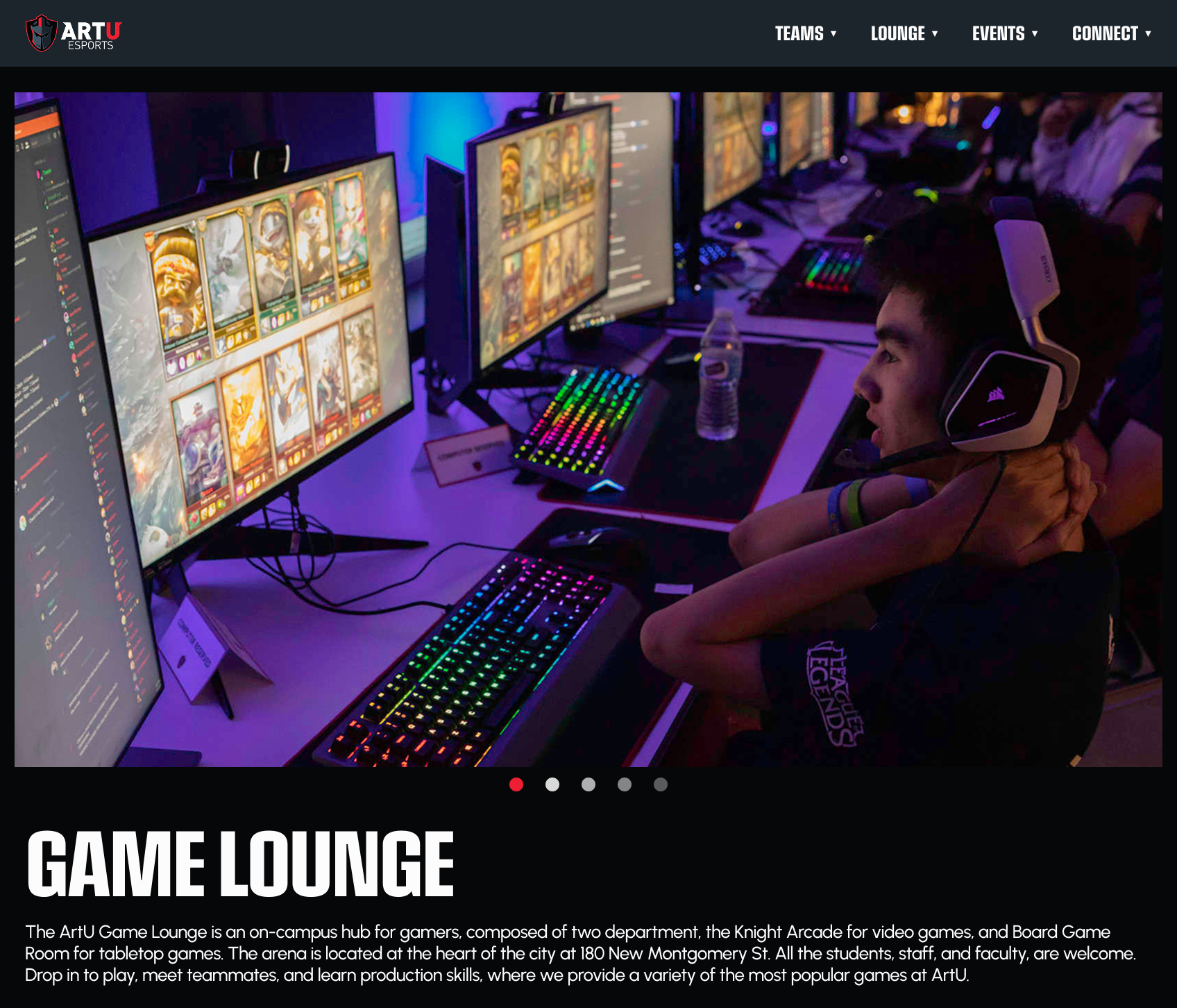
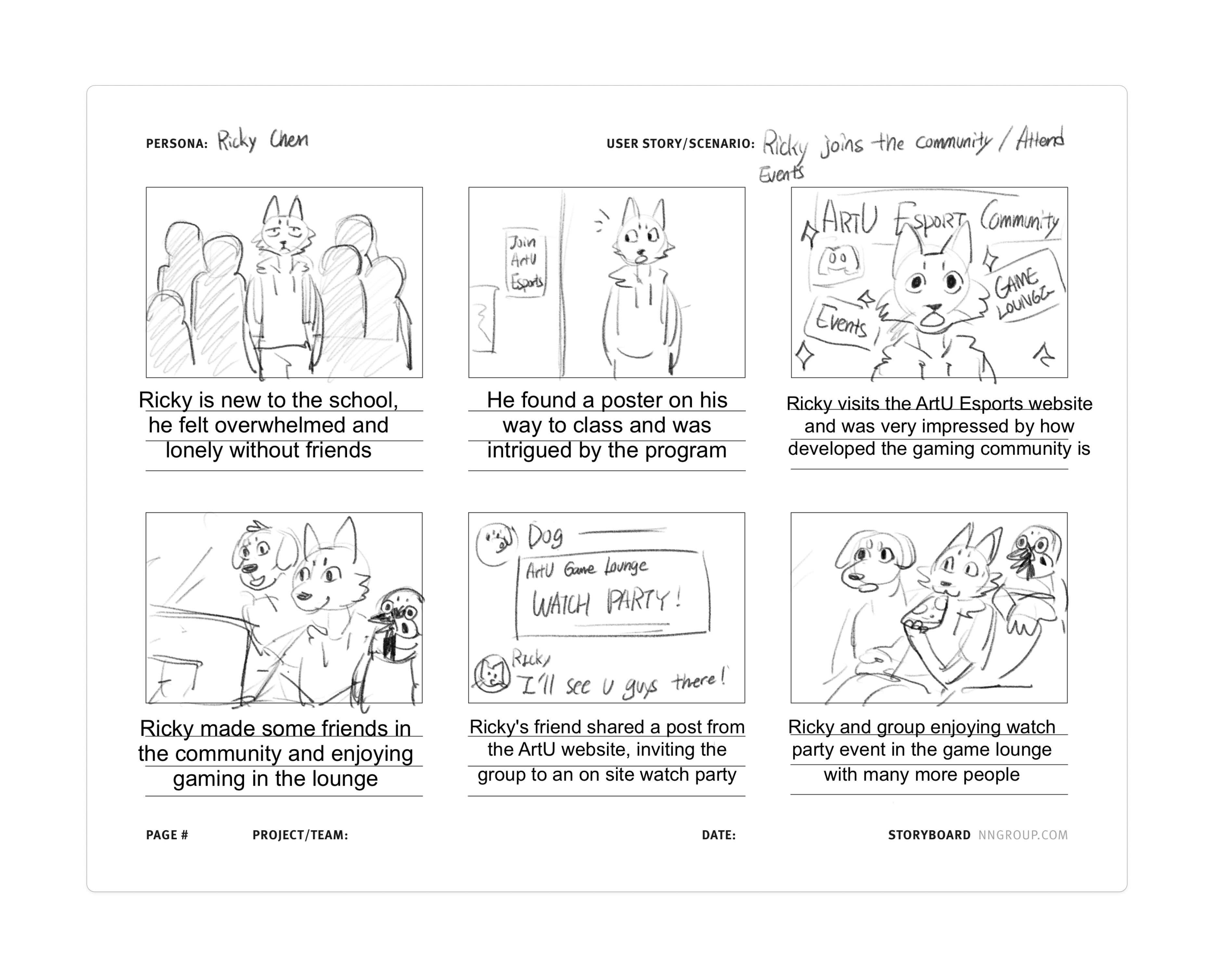
The primary target is current students. The immediate goal is to solve the on-campus engagement problem by showing off the space and events to entice current students to visit the onsite lounge.
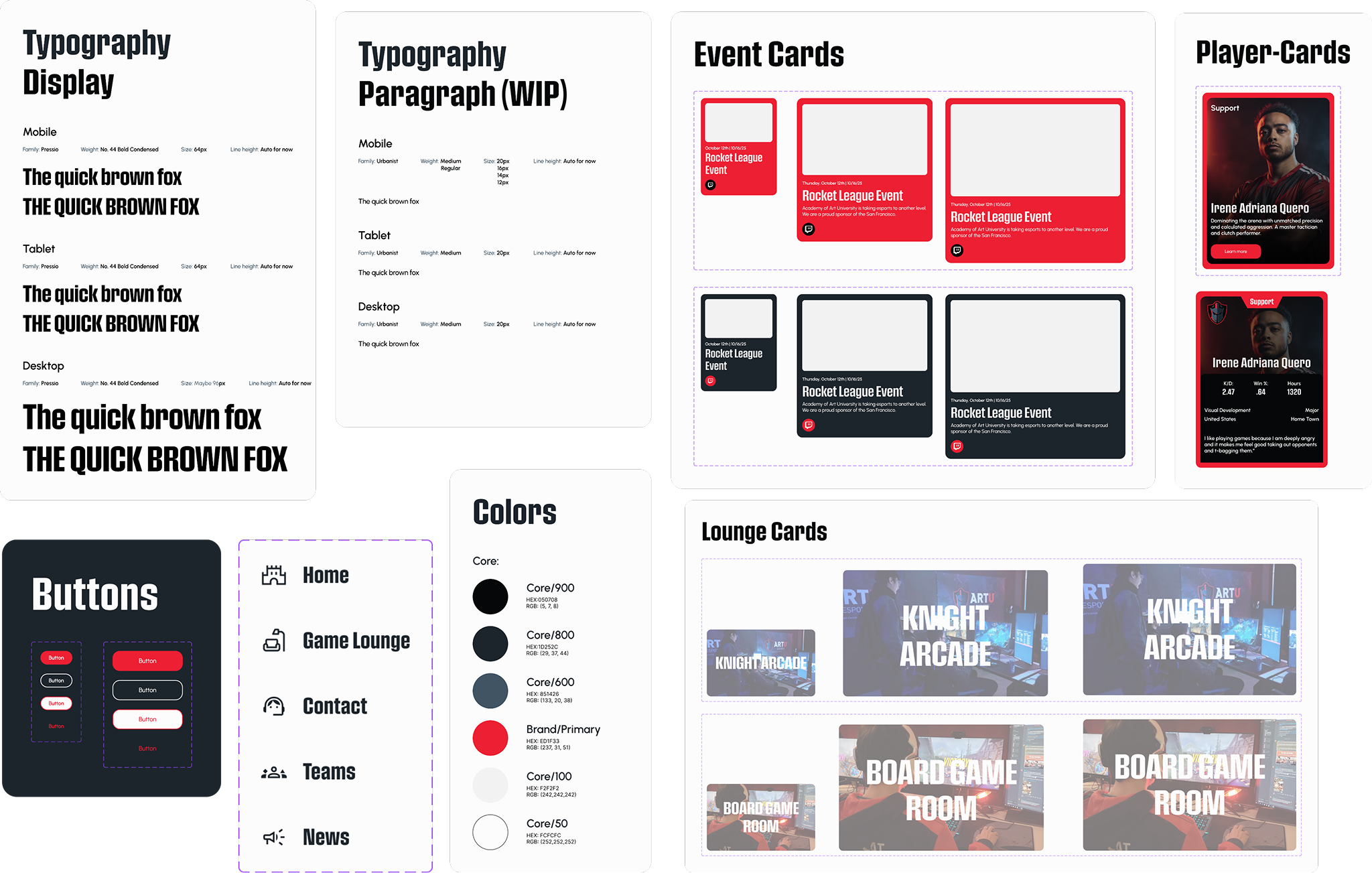
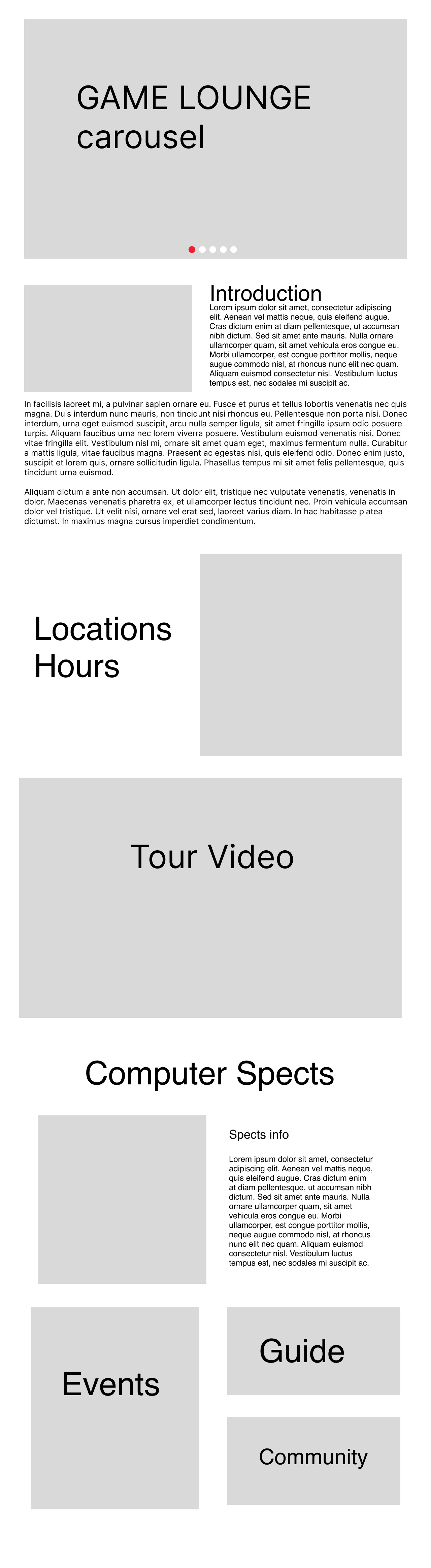
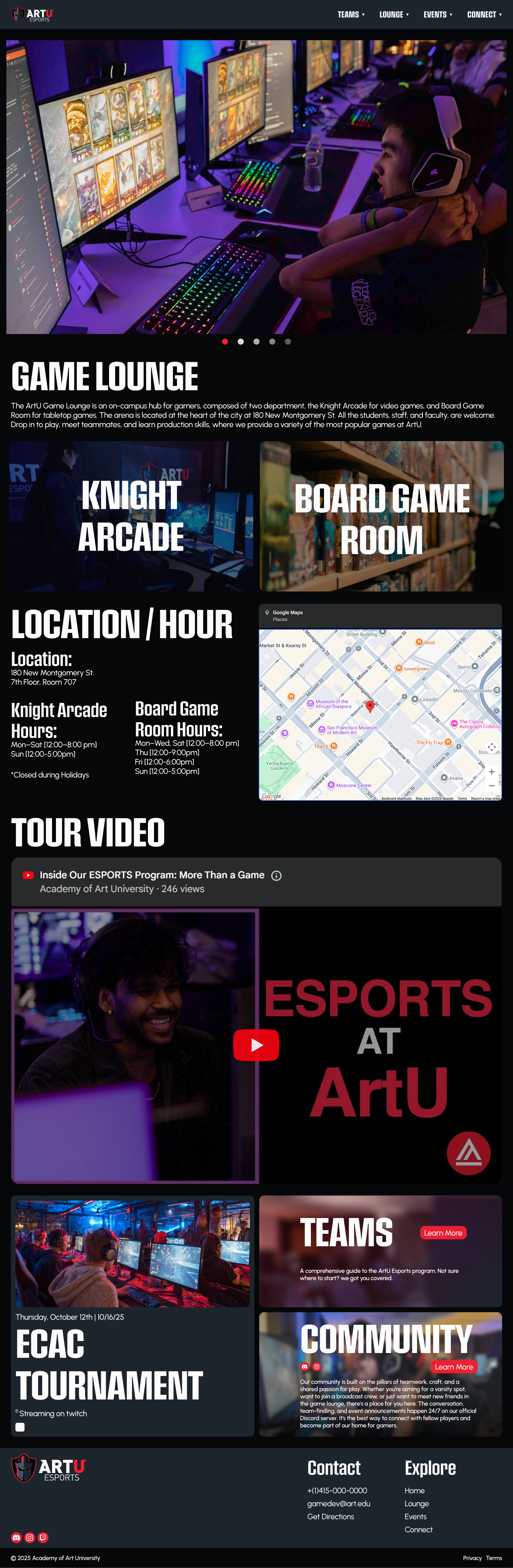
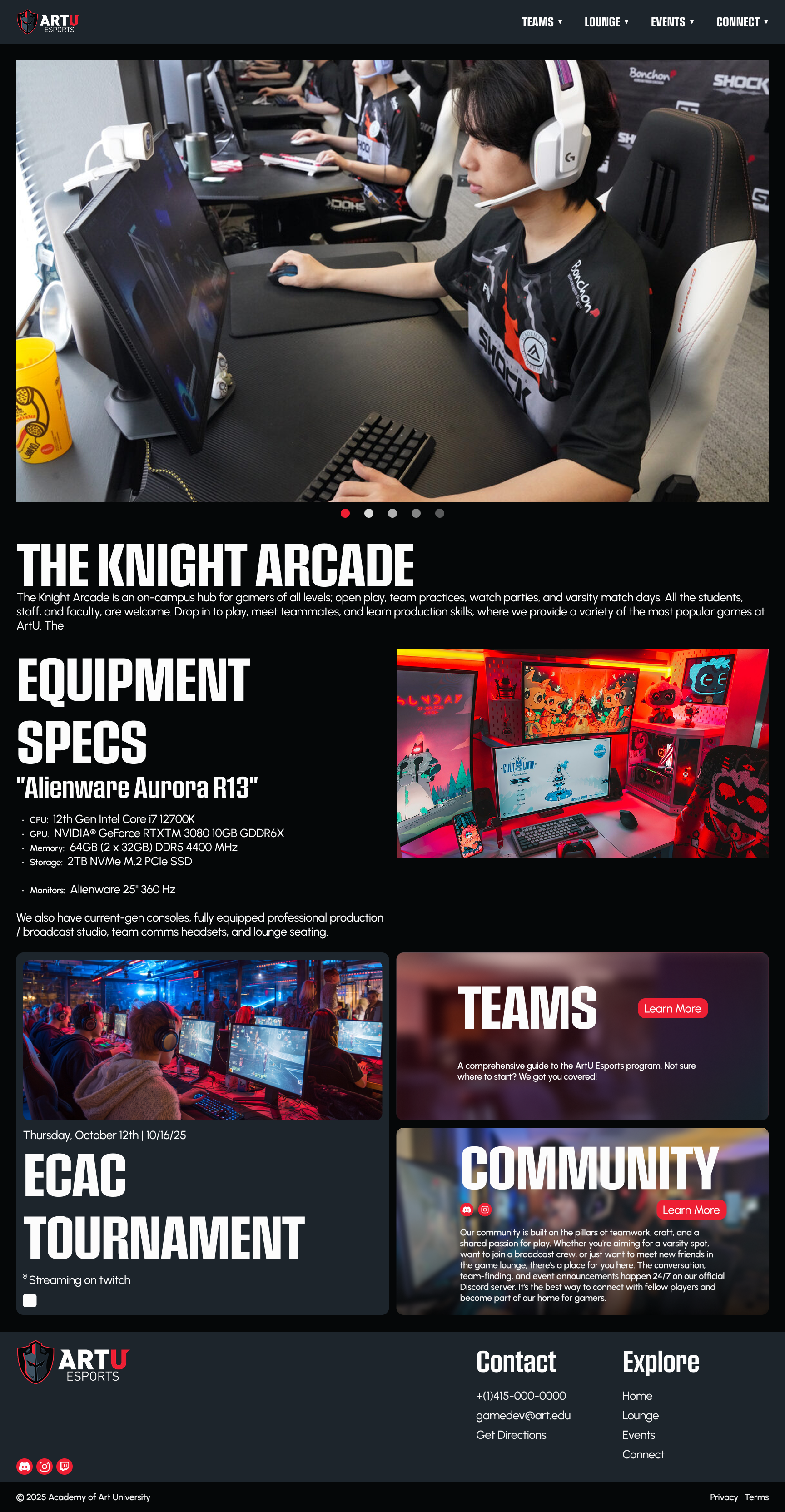
Power & Friction
When AI Helps & When It Doesn't
The most significant friction emerged during vibe coding. Guiding Cursor toward a specific desired outcome — while keeping the underlying code clean and maintainable — proved harder than anticipated.
AI-assisted coding can accelerate, but it can also accumulate technical debt silently. There were moments when writing the code manually would have been faster and more precise.
Impact
The ArtU Esports Website Is Live
From a program with no web presence, ArtU Esports now has a central digital hub — a place where competitive teams are showcased, community is fostered, and students across different majors connect. The project delivered on its primary metric and established the foundation for tracking lounge engagement over time.
Visibility Is the First Feature
Before UX, before aesthetics — if people don't know the program exists, nothing else matters. Awareness-first design thinking shaped every decision.
Inclusive Framing Opens Doors
Positioning esports for all students — not just competitive gamers — dramatically expanded the potential audience and inter-departmental partnerships.
Vibe Coding Needs Strong Specs
The quality of AI-assisted coding output is directly proportional to the quality of the design spec. High-fidelity prototypes are non-negotiable prerequisites.
Know When to Go Manual
AI coding tools accelerate certain tasks dramatically, but developer judgment — knowing when to take control — remains the most valuable skill in the workflow.